

Functional Mushroom Gummies: A 2026 Buyer’s Guide to Brain, Mood, and Immune Support
Functional mushroom gummies are everywhere in 2026, from grocery store endcaps to subscription wellness boxes. But the category has grown so fast that telling a quality product from a filler-packed knockoff takes real effort. This guide breaks down the species, the science, the label tricks, and the practical decisions you need to make before adding mushroom gummies to your daily routine.
Key Takeaways
- Functional mushroom gummies use legal, non psychoactive species like lion’s mane, reishi, and cordyceps to support brain function, mood, and immune health. They do not contain psilocybin, Amanita muscaria, or cannabinoids.
- Gummies became the fastest-growing mushroom supplement format by 2026 because of taste, consistent dosing, and portability compared to powders and capsules.
- Higher-quality mushroom supplements are made from the fruiting body, carry third party tested Certificates of Analysis (COAs), and are typically labeled vegan, gluten free, and non GMO.
- Most users notice subtle improvements in focus, mood, or sleep after 2 to 4 weeks of consistent use at research-backed doses.
- Shrumfuzed makes flavor-forward, lab-tested functional mushroom gummies and chocolates for daily wellness, stress relief, and social occasions, all without psychoactive substances or other cannabinoids.
What Are Functional Mushroom Gummies?
Functional mushrooms are species consumed for health benefits beyond basic nutrition. The most common are lion’s mane, reishi mushroom, cordyceps, turkey tail, chaga mushroom, and shiitake mushroom. These are different mushrooms from the white button mushroom on your pizza and from psychedelic species like psilocybin-containing fungi. Functional mushrooms are marketed for immune support, cognitive function, and stress management. They do not cause hallucinations and are different from psychedelic mushrooms.
Functional mushroom gummies are mushroom supplements in a candy-like form, made from extracts (ideally from the fruiting body) rather than raw powder alone. They do not contain any psilocybe mushrooms. Shrumfuzed formulas, for example, contain no psilocybin, no Amanita muscaria, and no cannabinoids.
Common goals for taking these gummies include sharper focus and brain health, smoother mood, immune support, and stress relief, depending on the mushroom blend. Modern brands often combine functional mushrooms with nootropics or botanicals for a “functional mushroom plus” effect, pairing species with ingredients like L-theanine or B vitamins to target specific outcomes.
Why Mushroom Gummies Took Over the Wellness Aisle in 2026
The global functional mushroom market is projected to reach roughly $42.3 billion in 2026. The functional mushroom market is projected to exceed $13 billion in the U.S. alone by 2031. Within this growth, gummies are the fastest-growing format in the functional mushroom supplements category, gaining popularity among consumers who never bought a capsule or powder before.
Between 2022 and 2026, adaptogenic mushrooms shifted from niche health-food shops to mainstream online wellness stores. The demand for functional mushroom gummies is increasing among health-conscious consumers who prefer taste and convenience over the “earthy” experience of loose powder stirred into water.
Gummies outpaced capsules and tinctures for three reasons: no bitter aftertaste, no need for water or a blender, and a format that feels more like a treat than a chore. Social media accelerated the trend. “Brain gummies before work” and “chill gummies before bed” became common refrains on wellness-focused platforms through 2024 and 2025. Brands that prioritized brands with lab testing and transparent labels survived ingredient price spikes in 2025, while products built on vague proprietary blends faded.
Functional Mushrooms 101: Key Species in Modern Gummies
Here is a quick tour of the most popular mushrooms you will see on gummy labels in 2026. Common functional mushroom ingredients include lion’s mane, reishi, cordyceps, chaga, and turkey tail. Gummies can include a blend of multiple mushroom species, sometimes 5 to 10 in a single product.
Lion’s mane mushroom is the top choice for focus, memory, and brain function. Lion’s mane mushrooms may enhance cognitive function and memory. Lion’s mane mushrooms also support cognitive health and nerve growth. A typical serving of lion’s mane is 500 to 600 mg per gummy in 2026 products, and many lion’s mane gummies feature this range.
Reishi mushroom is a classic adaptogen for relaxation, stress response, and sleep support. Reishi mushrooms help reduce inflammation and promote relaxation. Reishi is also known for immune support and is often found in evening use blends.
Cordyceps mushroom is a go-to for natural energy and combating fatigue without heavy caffeine. Cordyceps mushrooms can enhance energy and athletic performance, and they also enhance endurance and boost energy levels. Cordyceps is often paired with lion’s mane in daytime blends for more energy and mental clarity.
Turkey tail mushroom supports gut health and immune system balance, making it a staple in immune-focused formulas. Black fungus mushroom is another addition seen in all-in-one immune and gut health blends. Maitake mushroom is rich in antioxidants and supports heart health. Chaga mushrooms are rich in antioxidants and support immune health; chaga is often harvested from birch trees and also appears in formulas designed to boost energy levels.
Some gummies combine 5 to 10 different mushrooms to cover brain, mood, immune, and even digestion support in one product, though per-species dosing in these blends tends to be lower.
Fruiting Body vs Mycelium: What’s Actually in Your Mushroom Gummies?
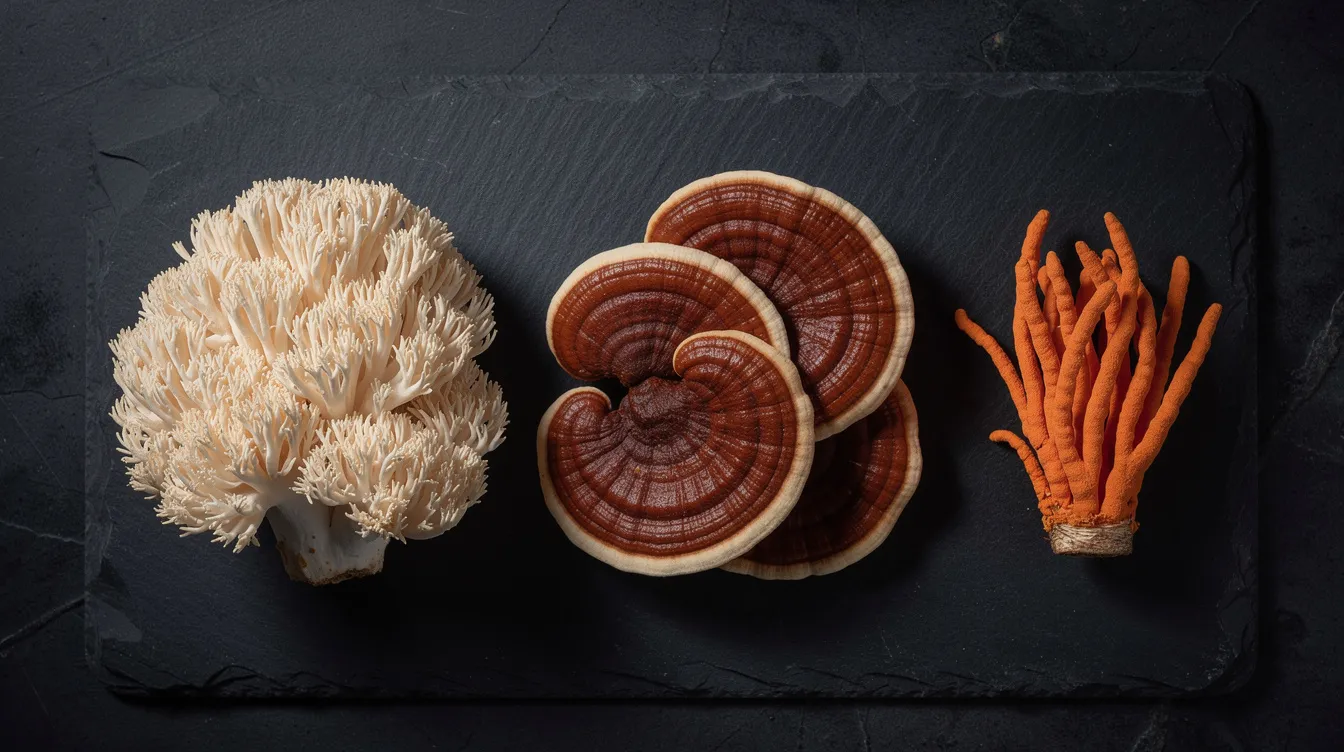
The fruiting body is the visible part of the mushroom: the cap and stem. Mycelium is the root-like network that grows underground or, in supplement manufacturing, often on grain substrates like brown rice.
Look for gummies made from the fruiting body of mushrooms. Research comparing the two shows that fruiting bodies of species like shiitake contain β-glucan levels ranging from roughly 20% to 56% by dry weight, while mycelium grown on grain falls in the 15% to 30% range. Most gummies use dried powder or extracts from fruiting bodies to concentrate these bioactive compounds.
Some low-cost mushroom gummies are mostly mycelium on grain, which dilutes the actual mushroom content with starch from the growing substrate. Most mushroom supplements on the market don’t disclose this clearly. When checking a label, look for the words “fruiting body” plus an extract ratio (8:1, 10:1, or “dual extract”). Shrumfuzed emphasizes clearly labeled, high-quality functional mushroom ingredients and third-party testing to verify what is actually inside each single gummy.
How Do Functional Mushroom Gummies Work in the Body?
Functional mushroom gummies work gradually. They support systems over time rather than delivering an instant buzz. Functional mushrooms support immune function and cognitive health through several mechanisms.
Many functional mushrooms contain beta-glucans, which help modulate the immune system. These polysaccharides bind to receptors like dectin-1 on intestinal immune cells, triggering innate immune responses that contribute to a healthy immune system and overall immune function. One trade-off: extracting mushroom compounds into gummy form often removes beneficial prebiotic fibers found in whole mushrooms, so gummies should contain no fibrous parts of the mushroom but may also lack some fiber-based gut support.
Lion’s mane produces compounds called hericenones and erinacines. In a 2026 randomized, double-blind trial, adults aged 40 to 75 who took 2 grams of lion’s mane daily for 8 weeks showed improvements in visual attention, working memory, sleep quality, and mood compared to placebo. Lion’s mane mushrooms support cognitive health and nerve growth factor (NGF), which is connected to brain plasticity and nervous system repair.
Adaptogenic mushrooms like reishi and cordyceps help the body adjust to its stress response, supporting more balanced energy levels and mood throughout the day. Expect subtle changes: most users notice smoother focus, steadier mood, or reduced brain fog after 2 to 4 weeks of daily use, with more measurable cognitive function improvements appearing around 6 to 8 weeks.
Mushroom Gummies vs Capsules, Powders, and Tinctures
Delivery format is mostly about lifestyle, taste, and consistency, not raw “strength.” Here is how each stacks up:
| Format | Pros | Cons |
|---|---|---|
| Gummies | Great taste, pre-measured daily dose, portable, appeals to non-supplement users | Limited max dose per piece; often contains cane sugar or sweetener |
| Capsules | Higher potency per serving, neutral flavor, easy to stack | Less enjoyable, easy to forget, swallowing can be a barrier |
| Powders | Flexible dosing, mixable into drinks or food, lower cost per mg | Earthy flavor, requires a drink or recipe, messy |
| Tinctures | Rapid absorption, custom dosing with dropper | Strong taste, alcohol content possible, less portable |
Gummies offer convenience and consistent dosing compared to powders and capsules. Many 2026 consumers start with gummies for the taste and convenience, then layer in capsules or tinctures if they want stronger, more targeted dosing for specific goals.
How to Read a Mushroom Supplement Label Like a Pro
Label literacy is the fastest way to avoid overpaying for weak products. Quality of functional mushroom supplements varies, and some may contain undisclosed ingredients.
Species and part used. The label should specify, for example, “lion’s mane fruiting body extract” rather than “mycelium on brown rice.” If a product lists only “mushroom powder” with no species or part, treat that as a red flag.
Serving size and milligrams. Check total milligrams per day. For example, a product may list 600 mg of lion’s mane per two gummies. Compare this to the research-backed ranges for nootropic mushrooms.
Extraction method. Choose gummies with dual-extracted mushroom extracts for better access to both water-soluble beta-glucans and alcohol-soluble triterpenes. Look for terms like “dual extract,” “standardized beta-glucans,” or clear concentration ratios.
Diet and quality cues. Check that gummies are gluten free, non GMO, vegan or pectin-based with no artificial dyes. Clear allergen statements matter, especially since fungi and grain substrates can be triggers.
Third-party verification. Check for third-party lab testing to ensure purity and potency. Look for a certificate of analysis for potency verification, ideally accessible via QR code or a direct link on the brand’s website. Premium extracts from reputable brands will always provide this.
Choosing the Right Functional Mushroom Gummy for Your Goals
Not all mushroom gummies target the same outcome. Match the mushroom blend to your main goal.
Brain function and focus. Look for lion’s mane gummies as the lead ingredient, sometimes paired with cordyceps or gentle nootropics. These blends prioritize cognitive support and mental clarity for workdays and creative sessions. See this guide to the best mushrooms for focus for deeper species comparisons.
Stress relief and relaxation. Reishi mushroom-forward blends, sometimes combined with L-theanine or calming botanicals, are designed for evening use or high-stress periods. Adaptogenic and nootropic properties in these formulas help smooth the stress response without sedation.
Immune and gut support. Turkey tail, black fungus, and multi-mushroom “all-in-one” formulas are built for immune health and gut health. These often include 5 or more species for broad coverage.
Shrumfuzed offers different proprietary blends (Original, MAX, Tabz, Miniz) tailored for mood lift, party vibes, focus, or relaxation, all without psychoactive substances. When comparing brands, factor in sugar content, natural raspberry flavor or other flavor profiles, diet needs (vegan, gluten free, non GMO), and price per serving size.
How Much to Take and How Long Until You Feel a Difference?
Dosing depends on mushroom type, extract strength, and individual sensitivity. There is no single “correct” number for everyone.
Many lion’s mane mushroom gummies use 500 to 600 mg per day as a starting point. Some “MAX” products deliver a higher amount per serving for users who want more aggressive cognitive support. For reishi, wellness doses typically range from 500 mg to 3 g daily. Cordyceps extracts are often dosed at 1 to 2 g per day.
First-time users should start with the manufacturer’s suggested serving, often one to two gummies daily, and stick with it for 3 to 4 weeks before adjusting. For a deeper look at daily supplementation safety, Shrumfuzed has a dedicated guide.
Most people take brain and energy gummies in the morning or early afternoon, while stress and sleep blends are better in the evening. Effects are gradual: early signs can be subtle, like smoother focus, steadier mood, or less afternoon crash, rather than a sudden shift.
Safety note: Consult a healthcare provider if you are pregnant, nursing, on prescription medications (particularly for blood pressure, immunity, or blood sugar management), or managing chronic health conditions. Potential side effects of functional mushrooms can include digestive upset or allergic reactions, though these are uncommon at standard doses.
Ingredient Quality, Diet Preferences, and Safety
Mushroom gummies are only as “clean” as their ingredient list and manufacturing standards.
Seek gummies that are gluten free and non GMO, especially if you follow specific diets or have sensitivities. In 2026, pectin-based vegan gummies are the standard for texture and plant-based compliance; gelatin-based options are declining. Many brands also avoid vegetable oil-based coatings and artificial colors.
Sugar content matters. Some mushroom gummies contain 5 g of sugar per serving, while brands like Stay Wyld have reduced sugar to less than half a gram per serving. If you are watching blood sugar, compare labels and look for low-sugar or sugar-free formulations.
Third-party lab testing remains the best safeguard for purity. The FDA has issued warnings about products falsely labeled as “functional” that contained Amanita muscaria or undisclosed psychoactive compounds. Shrumfuzed products are formulated for adults 21+, are lab-tested, and are free of psilocybin, Amanita, and cannabinoids, so users know exactly what they are getting. Products made with organic ingredients and clear batch-level COAs offer the most assurance for overall health.
The Shrumfuzed Approach to Functional Mushroom Edibles
Shrumfuzed is a U.S.-based D2C brand focused on functional mushroom gummies, mushroom chocolates, and tablets built for everyday wellness and social occasions. The brand’s philosophy is flavor-first: small-batch, candy-quality gummies designed to make daily supplementation something you look forward to rather than endure.
Shrumfuzed’s proprietary blends (Original, MAX, Tabz, Miniz) are each positioned for a specific outcome: mood lift, nootropic focus, party vibes, relaxation, or reset. All products use legal mushroom blends with no psilocybin or cannabinoids, making them accessible across U.S. states that allow dietary supplements. Key benefits include third-party lab testing, clear ingredient lists, and options that fit common preferences like gluten free and non GMO formulations.
You can purchase directly through the Shrumfuzed website, with free U.S. shipping on orders over $99, subscriptions for regular users, and a rewards program for repeat buyers. For first-time users, the consumption guide breaks down how to get started with each product line.
How to Add Functional Mushroom Gummies to Your Daily Routine
Consistency beats intensity. One solid wellness routine with a steady daily dose outperforms sporadic high doses every time.
Practical starting points:
- Morning: Take brain-focused gummies with coffee or tea before workdays and creative sessions. The nootropic properties pair well with moderate caffeine.
- Evening: Pair a reishi-rich gummy with a wind-down ritual (reading, stretching, no screens) for stress relief and better sleep quality.
- Stacking: Space mushroom gummies apart from high-dose caffeine or sedative supplements. Avoid over-supplementing without professional advice, especially if you already take adaptogens or pre-workout formulas.
Start with one primary Shrumfuzed product, like a daily focus gummy, before layering in additional edibles like mushroom chocolates for special occasions. This keeps your routine simple and lets you isolate what is working. The whole family of Shrumfuzed products is designed to mix and match, but building one habit first makes it easier to track your well being over time.
Future Trends: What’s Next for Functional Mushroom Supplements?
The mushroom supplements category after 2026 is moving toward three things: more transparency, more targeted blends, and more formats.
Consumer demand for batch-level COAs, clear extraction methods, and honest labeling of fruiting body vs mycelium is accelerating. Emerging research is exploring synergistic blends that pair medicinal mushrooms with classic nootropics and adaptogens for targeted outcomes like cognitive support or immune system modulation.
Edible formats continue to expand beyond gummies. Mushroom chocolates, chews, and fast-melt tablets are all growing, offering consumers more ways to integrate mushrooms into a daily routine. Shrumfuzed is positioned to evolve alongside this trend, focusing on safe, legal, enjoyable mushroom edibles that fit modern, wellness-focused lifestyles.
Frequently Asked Questions About Functional Mushroom Gummies
Are functional mushroom gummies safe to take every day?
For most healthy adults, taking gummies daily at label-recommended doses is considered safe. A 2026 clinical trial on lion’s mane, for example, ran for 8 weeks of daily use with no adverse events reported. Consult a healthcare provider if you are pregnant, nursing, on medications for blood pressure, immunity, or blood sugar, or managing chronic conditions. Shrumfuzed designs its formulas for regular use by adults 21+ and relies on third-party testing for safety and consistency.
Will I feel “high” or fail a drug test from mushroom gummies?
Functional mushroom gummies made from species like lion’s mane, reishi, cordyceps, and turkey tail are non psychoactive and do not produce a “high.” Shrumfuzed products contain no psilocybin, no Amanita muscaria, and no THC or other cannabinoids, so they are not designed to impact standard drug tests. Always verify labels and COAs when buying from any brand to confirm no psychoactive ingredients are present.
Can I take mushroom gummies with coffee, alcohol, or other supplements?
Pairing focus gummies with morning coffee is common and generally well tolerated, though sensitive users may want to start with lower caffeine. Space mushroom supplements away from heavy alcohol use, since alcohol interferes with sleep and recovery. Anyone taking multiple supplements (nootropics, adaptogens, pre-workouts) should review combinations with a healthcare provider to avoid overlap or excessive stimulation.
How should I store mushroom gummies and how long do they last?
Keep mushroom gummies in a cool, dry place out of direct sunlight, ideally in their original, tightly sealed packaging. Most gummies in 2026 carry a best-by date about 12 to 24 months from manufacturing when stored properly. Do not consume gummies that show signs of melting, stickiness, or off smells.
Are functional mushroom gummies suitable for kids or teens?
Most functional mushroom gummies, including Shrumfuzed products, are formulated and marketed for adults (often 18+ or 21+) rather than children. Dosing for kids is not well established in clinical research, so parents should consult a pediatric healthcare provider before giving mushroom supplements to minors. Store all gummies out of reach of children to avoid accidental overconsumption.


